About Me

My photo
An Investor and counsellor in Financial Market

Tuesday, May 14, 2019

The Brainwashing Of A Nation

Brainwashing isn’t a secretive event that takes place in hidden rooms. No hypnotists or vials full of chemicals are required. It takes place every day on a massive scale across the United States.
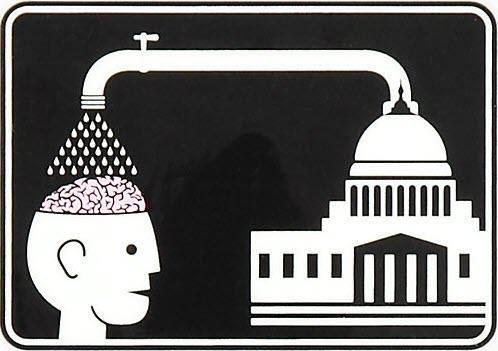
Unlike Raymond Shaw in The Manchurian Candidate, brainwashing does not turn people into hypnotized zombies who would be ready to kill a presidential candidate at a command. Instead, it transforms them into the sort of people who would be willing to kill someone for political reasons.
The distinction is why so few people understand the sources of political radicalism and violence.
Brainwashing isn’t magic, but it can look like magic. The sleight of hand that causes us to think so is our firm belief in our reason and free will. It’s easier to believe in changing minds through hypnotism and drugs, than to understand, what the successful practitioners of brainwashing do, that the human mind is more malleable than we like to think, and that the subconscious is more powerful than the conscious.
The art and science of brainwashing is well known. We don’t know it because we choose not to.
Brainwashing happens every day. It doesn’t have to mean a complete transformation of identity. On the simplest level, it means compelling someone to believe something that isn’t true.
It’s as simple as two cops browbeating an innocent suspect into believing that he’s guilty. The officers and the suspect won’t see their interaction as brainwashing. The officers can honestly believe in his guilt. And, at the end of the process, the suspect will also believe that he committed the crime. He will even be able to describe in great detail how he committed it. That’s common, everyday brainwashing.
The key elements of brainwashing are present in that cold room with the peeling paint on the walls. Those three elements are control, crisis and emotional resonance. To successfully brainwash someone, you have to control their environment, force a crisis on them, and then tap into core emotions, fear, love, guilt, hate, shame, and guide them through the crisis by accepting and internalizing a new belief.
The belief can be anything, but the pseudo-religious ritual taps into an emotional core requiring them to believe that they were bad people, and that by accepting this new belief, they are now good people.
This false conversion is the essence of brainwashing and of leftist political awakening narratives.
The human mind, like the human body, adapts to a crisis with a fight-or-flight response. Brainwashing forces the mind into a flight response. Once in flight mode, the mind can rationalize a new belief as a protective behavior that will keep it safe. Even when, as in the case of the suspect, the new belief will actually destroy his life. Fight or flight mode inhibits long term thinking. In panic mode, destructive and suicidal behaviors seem like solutions because they offer an escape from unbearable chemical stresses.
There’s a good biological reason for that. Our minds stop us from thinking too much in a crisis so that we can take urgent action, like running into a fire or at a gunman, that our rational minds might not allow us to do. But that same function can be ‘hacked’ by artificially putting people into fight-or-flight mode to break them down and shortcut their higher reasoning functions. Decisions reached subconsciously in fight-or-flight mode will then be rationalized and internalized after the initial crisis has passed.
When that internalization happens, then the brainwashing is real.
Almost anyone can be compelled to say anything under enough stress. Many can be forced to believe it. The acid test of brainwashing is whether they will retain that belief once fight-or-flight mode passes.
Cults, abusive relationships and totalitarian movements maintain ‘total crisis’, shutting down higher reasoning, creating a permanent state of stress by triggering fight-or-flight responses unpredictably. This leads to Stockholm Syndrome, where the captive tries to control their fate through total emotional identification with their captor, pack behavior, loss of identity and will, and eventually suicide or death.
Total crisis leads to burnout, emotional exhaustion, detachment from friends and family, and violence.
How do you brainwash a nation?
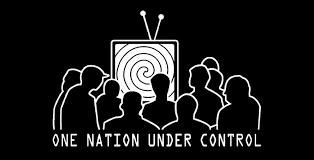
Control the national environment, force a crisis on the country, and tap into their fear and guilt. And then you can outlaw planes, cows, skyscrapers, straws, plastic bags and the rest of the Green New Deal.
The environmental crisis is just one example of how leftist movements can brainwash a nation.
The growing number of millennials who say that they will not have children because of environmental panic is an example of how brainwashing can make suicidal behavior seem like self-preservation.
Since the Left still lacks total control over the United States, it relies on repetition, itself a form of control and stress, to create fear and panic. It makes up for its lack of physical control by bombarding Americans with messages meant to inspire fear, love, hate and guilt through the media, through the educational system, through entertainment and through every possible messaging channel.
Global Warming panic is one of a succession of manufactured leftist crises in America that began with a class crisis. transitioned to a racial crisis, and then to an environmental crisis.
Each of the crises claimed that society was on track to an inevitable apocalypse, that the nature of the crisis, economic, racial or environmental, had been verified by experts, that we were all complicit in the crisis, and that the only solution was radical change administered by the crisis experts.
The panic over Trump is a micro-crisis of the sort that leftists detonate in the political opposition, but the fear, anger, terror, stress and violence on display are typical of the crisis mode of fight-or-flight.
The “Resistance” isn’t a political movement. It’s a political cult whose crisis was the 2016 election. Its irrational belief that Trump is a Russian agent is typical of the conspiratorial mindset of cults. Its inability to understand that its convictions are completely irrational show how brainwashing works.
The 2016 election inflicted on its members a loss of control. Trump became the crisis embodying their loss of control. Their fear, guilt and anger induced stress that altered their behavior and beliefs.
And, within the very recent past, millions came to believe that Trump was really working for Moscow.
This is brainwashing on a timescale so immediate that we can easily recall it. Yet most of us have trouble understanding how it works and why it works. And that lack of understanding is holding us back.
How can smart people fall for minor variations of the same lie in generation after generation?
Smart people make the best brainwashing targets. Cults recruit bright students on college campuses, they target aspiring executives looking for leadership training, and dissatisfied professionals searching for meaning. Cults are rarely made up of stupid people. They’re made up of smart, vulnerable people.
Human beings don’t behave rationally. We rationalize our behavior.
The more people rationalize, the more they can be brainwashed. Your old Casio digital watch can’t be hacked. Even if it were hacked, there’s not much it could be made to do. Your smartphone can be hacked and made to do more. Your desktop can be hacked and made to do even more. Intelligence doesn’t make us less vulnerable to being manipulated, it leaves us much more vulnerable.
The political brainwashing campaign in this country targets the upper class and the middle class. The best subjects for brainwashing are intelligent and emotionally vulnerable. They’re easier to manipulate by using the gap between their emotions and their reason, and their emotional instability makes it easier to force them into crisis mode. The ideal subjects are in their teens and their early twenties. In modern times, that’s a period in which identity is still developing, and can be fractured and remade.
That’s why the Left aims most of its brainwashing efforts at high school and college students. It’s why it prioritized control of the educational system and the entertainment industry above all else.
Both of these have become highly profitable brainwashing industries: one sugar-coated, and one bitter.
Classrooms and campuses provide physical control over students for nearly two decades of their lives. That control was initially used for simple dogmatic preaching. Then it escalated to cult behavior with classroom role-playing rituals encouraging mass expressions of love and hate, transformations of sexual and gender identity, detachment from friends and family, and violent displays of pain and rage.
The modern American identity politics campus looks a whole lot like Jonestown or a Hitler Youth rally.
Exploiting sexuality, triggering guilt and shame in children, to transform their identity was usually the work of the lowest savage tribes and the vilest cults. It’s now the American education system.
The techniques aren’t new. They’re as evil and old as time itself.
Like every cult, the modern campus claims to serve an educational purpose, helping students find meaning and purpose, but insisting that they must first be cured of the subconscious evils such as white privilege and toxic masculinity that are holding them back through a process that deconstructs their barriers, encourages confession, expressions of trauma, shame and guilt, to create new identities.
This isn’t education. It’s not even dogmatic lecturing. It’s the same basic set of techniques used by any major cult in the country. Once colleges began trying to cure their students of subconscious evils at closed sessions, under the guidance of unlicensed therapists associated with a movement, there was no longer any difference between them and that of any cult, except billions in taxpayer dollars.
The sessions at which white privilege or toxic masculinity can be cured, or at which students are put in touch with the trauma of their oppression as minorities, duplicate cult indoctrination in every regard.
They’re the successors of consciousness raising groups whose name even signaled their cultish nature.
Despite attempts to wrap leftist politics in the objective garb of the expert, the scientist, the scholar and the bureaucrat, its heart lay in its spiritual narrative of a struggle between an altruistic good and a materialistic evil, the inevitable historical triumph of progress over reaction, and the pseudo-religious induction of new recruits into the gnostic revelation of our oppressive world with its layered conspiracies of capitalism, sexism and racism. The original ‘red pill’. Or, ‘little red book’.
To non-cult members, it’s brainwashing. To cult members, it’s revelation. The distinction may seem like a matter of perspective between believers and non-believers, but it lies in the question of consent. Brainwashing always relies on removing control from the victim. The control may be taken openly, by force. It can be taken covertly through manipulation and deceit. But there is always a loss of control.
The victim does not understand the process by which they are being taken apart and put back together until much later. And if the process works as intended, he or she may never realize it happened at all. Brainwashing’s cruelest trick lies in using the intelligence of its victim as its greatest ally in building a trap for its own ego and its consciousness that it cannot escape from without a great deal of determination.
Like drug addiction, the aftermath of brainwashing transforms the mind into a convoluted maze of rationalizations for self-destructive behavior that are guarded by biology and the subconscious. It cannot be escaped without breaking down the defense mechanisms that were put into place to avoid reexperiencing the original trauma, and without examining the emotions behind the mechanisms.
Brainwashing can create new ideas and realities, but it can’t create new emotions. All it can do is amplify them and use them to induce in its subject a new belief in an altered reality. It doesn’t create guilt, shame, fear, love or hate. It amplifies, exploits them and uses them as tools to create stress, force a crisis, and then transform a single belief or an entire identity.
That is why the Left cannot be defeated through policy debates and intellectual abstractions. It is a belief system. Though it traffics in seeming abstractions, these are a language, but not the meaning. The esoteric languages of policy and pop culture in which it speaks are vehicles for a deeper language of primal emotions. Behind the theories and manifestos is a great darkness of fear and terror, of love and hate, of emotional instability and vulnerability on which its lies and propaganda are built.
And it is within that primal darkness out of which all evil is born that the brainwashing does its work.


Monday, May 13, 2019

How The Trade War Is Going To Affect You And Your Family

As expected, trade negotiations with China concluded on Friday with no trade deal in sight.  Treasury Secretary Steven Mnuchin called the negotiations “constructive”, and that helped calm the financial markets, but there really isn’t any reason to be optimistic at this point.  The negotiations that happened this week did not even come close to producing a deal, and neither side is attempting to claim that there will be an agreement in the near future. 
Instead, it appears that moves are being made that could lead to a protracted trade war.  In fact, according to Bloombergthe Trump administration has just given the Chinese another ominous deadline…
The U.S. gave its bottom line during the talks in Washington, saying Beijing had three to four weeks more to reach an agreement before the Trump administration enacts additional tariffs on $325 billion of Chinese imports not currently covered by punitive duties, according to two people familiar with the talks.
These tariffs would be in addition to the ones that President Trump just hammered China with.  And Trump is not waiting to see how future talks with China turn out either.  According to a statement from U.S. Trade Representative Robert Lighthizer, Trump has already initiated the process for implementing these new tariffs…
In an unexpected Friday development – President Trump began the process of raising tariffs on all remaining imports from China, valued at approximately $300 billion. The move follows a Friday tariff increase on Chinese imports from 10% to 25% effective just after midnight.
US Trade Representative Robert Lighthizer issued a Friday statement – after market hours of course – which reads:
“Earlier today, at the direction of the President, the United States increased the level of tariffs from 10 percent to 25 percent on approximately $200 billion worth of Chinese imports. The President also ordered us to begin the process of raising tariffs on essentially all remaining imports from China, which are valued at approximately $300 billion.”
This is a very clear sign that negotiations with China did not go well.
If they had gone well, Trump would not be threatening China like this.
So it looks like we should all get prepared for an extended trade war, and this trade war is going to affect you and your family in a number of different ways.
First of all, we should all expect significantly higher prices at major retailers…
American retailers and manufacturers were largely able to absorb the 10% tariff — narrowing their profit margins — negotiate offsetting price cuts with Chinese suppliers, import a big stockpile of goods before the tariff took effect, and spread the added cost across many products. But a 25% duty is too much to camouflage with such tactics and a big chunk of it is expected to be passed to U.S. shoppers.
In particular, price increases will be felt most acutely at large retail chains such as Wal-Mart that purchase goods in massive quantities from China.  Needless to say, this will hurt those at the bottom of the economic food chain the most.
Secondly, this trade war will potentially result in a loss of jobs and income for many Americans.  In fact, the Trade Partnership estimates that 2.1 million U.S. jobs will be lost if Trump’s next round of tariffs is imposed…
If Trump slapped a 25% tariff on the remaining $325 billion in goods the U.S. imports from China, it would cost the U.S. 2.1 million jobs and the average family of four more than $2,000 a year, according to the Trade Partnership analysis.
Thirdly, economic growth would definitely be impacted by an extended trade war.  The following bit of analysis comes from CNN…
And then there’s the “extreme scenario” of full-blown, multilateral trade war. In this scenario, Oxford Economics modeled the impact of the U.S. putting 35% tariffs on all Chinese imports and 25% auto tariffs globally, plus 10% blanket tariffs on all other goods imported from the EU, Taiwan and Japan — with all countries retaliating in kind.
The firm calculated this would result in a 2.1% hit to U.S. GDP in 2020, pushing the economy into recession later this year. China’s economy would contract by 2.5%, while Europe and Japan would see average GDP losses of 1.5% and world GDP would be reduced by 1.7%.
Unfortunately, the truth is that the projections from Oxford Economics are way too optimistic.  As I detailed yesterday, our trade war in the 1930s was absolutely catastrophic for the U.S. economy…
On June 17th, 1930 President Hoover signed the Smoot-Hawley Act which imposed tariffs on more than 20,000 imported goods.
This coincided with the worst economic downturn of the 20th century. U.S. GDP declined 8.5 percent in 1930, 6.4 percent in 1931 and 12.9 percent in 1932.
Fourthly, an extended trade war would mean big trouble for global financial markets.  Over 2 trillion dollars of global stock market wealth has been wiped out so far, but that is nothing compared to what could be coming…
The trade war between the United States and China is back on. So far, markets haven’t sustained huge losses. That will change if tensions continue to escalate.
With higher tariffs coming into effect, the next risk analysts see is a complete breakdown in negotiations between Washington and Beijing.
“If the deal totally falls apart, we think there’s a pretty big chance of a market correction,” said Ryan Detrick, senior market strategist at LPL Financial. US stocks could fall as much as 5% over the next month, he added.
But the Trump administration can’t back down now, or else it would lose all credibility.
According to the latest numbers, we bought 539.5 billion dollars worth of goods from China last year but they only purchased 120.3 billion dollars worth of goods from us.  For years they have been slapping enormous tariffs on us, stealing our intellectual property and making it exceedingly difficult for U.S. businesses to do business over there.
Meanwhile, they have been flooding our shores with cheap goods produced by government-subsidized businesses, and they have been getting exceedingly wealthy as a result.
So we can either allow them to keep taking advantage of us, or we can stand up for ourselves.
But let there be no doubt – standing up to China will be extremely painful economically.  And at this stage of our society, Americans are not even equipped to handle a low level of economic pain.
A perfect storm is brewing, and this trade war is just a small part of it.
Sometimes you can try to do the right thing, but it turns out badly anyway.  Standing up to China definitely needs to be done, but it is very difficult to see how this is going to end pleasantly.  In fact, many believe that our relations with China are about to take a major turn for the worse.
We shall see what happens.  As always, let us hope for the best, but let us also prepare for the worst.

Friday, May 10, 2019

The Seduction of Pessimism

Pessimism is intellectually seductive in a way optimism only wishes it could be.
Tell someone that everything will be great and they’re likely to either shrug you off or offer a skeptical eye. Tell someone they’re in danger and you have their undivided attention.
Hearing that the world is going to hell is more interesting than forecasting that things will gradually get better over time, even if the latter is accurate for most people most of the time. Pessimism can be hard to distinguish from critical thinking and is often taken more seriously than optimism, which can be hard to distinguish from salesmanship and aloofness.
Y2K got more media attention than any individual tech company.
SARS got more attention than the massive decline in HIV mortality.
Forecasting $250 a barrel oil in 2008 sparked immediate congressional hearings. Forecasting the bankruptcy of oil giants as electric cars proliferate sparks immediate giggles.
On one hand it makes sense. Daniel Kahneman once wrote: “Organisms that treat threats as more urgent than opportunities have a better chance to survive and reproduce.”
But on the other hand it’s crazy. We don’t just respond faster to pessimism. We coddle it for longer than is necessary. Optimism demands facts and is ditched at the first sign of trouble. Pessimism can be grown from a crazy thought and clutched indefinitely.
Why?
***
Six years ago I interviewed Jeremy Siegel, a Wharton finance professor with a reputation for investment optimism.
He was, in 2011, bullish on the stock market. He pointed to history. Over all long historic periods the stock market has produced positive returns after inflation.
A journalist in the room rebutted that stocks had actually shrunk over the previous decade.
Siegel wasn’t phased. Yes, 10-year returns were bad. But he doesn’t care about 10-year returns. It’s too short a period. Over the previous 20 years – 1991 to 2011 – the market had actually performed above average.
“The past decade has been frustrating,” he said. “But that’s only because we had unreasonably high returns in the 1990s. The last 10 years has just offset the previous decade.”
Siegel sidesteps pessimism not because he thinks bad stuff doesn’t happen, but because he has a longer time horizon than most. The difference is subtle but helps explain why pessimism sounds smart amid a backdrop of general improvement.
Anything competitive – markets, businesses, countries, careers – moves toward improvement by breaking down what isn’t working and exposing weaknesses. Which means improvement over the long term has to be interrupted by short-term adversity. Pain, regret, trudge, and bullshit is the fuel for advancing and the cost of admission you have to pay to enjoy the benefits of any long-term improvements.
The difference between pessimism and optimism often comes down to time horizon. If a recession or downturn is the end of your show, you should be pessimistic. If it’s a bad commercial during an otherwise great episode, you should be optimistic.
Since short-term shocks are more frequent and recent than long-term gains, pessimism usually sounds smarter than optimism because it’s easier to recall.
Optimists are often ridiculed as being oblivious to how risky the world is. I’ve found this to be a bad reading. They’re often quite aware of risks, but equally aware of risks being the soil optimism eventually grows out of.
***
Gas was expensive in the 1980s. So people adapted and bought small cars and oil producers drilled a lot of oil. That made gas cheap in the 1990s. So people adapted again bought SUVs and oil companies packed up and abandoned fields.
Then gas got expensive in 2008. And despite a long history of adaptation, we basically thought things would stay that way forever. Peak oil became a default assumption. Four-dollar gas was seen as the new floor.
But we adapted again. Hybrid sales surged. Oil producers used high prices as an incentive to discover new drilling techniques. Prices eventually fell and the pessimists went quiet.
Despite an awareness of how powerfully we’ve changed in the past, it’s too easy to underestimate our ability to change in the future. Psychologists call this the end of history illusion. In people, it’s the tendency to realize that your tastes and values have changed in the past while underestimating how much they’ll change in the future.
It’s a reason pessimism is so seductive.
Most things in business and investing have to be pushed to their limits once in awhile, if only to see where the limits are. “Unsustainable” is the most common state that businesses and markets reside in.
If you underestimate our ability to adapt to unsustainable situations, you’ll find all kinds of things that currently look bad and can be extrapolated into disastrous.
Extrapolate college tuition increases and it’ll be prohibitively expensive in 10 years.
Extrapolate government deficits and we’ll be bankrupt in 30 years.
Extrapolate a recession and we’ll be broke before long.
All of these could be reasons for pessimism if you assume no future change or adaptation. Which is crazy, given our long history of changing and adapting. But convincing ourselves of future change is hard to do, so pessimism is easy to latch onto.
It’s also why every past market crash looks like an opportunity, but every future market crash looks like a risk.
***
In 2004 the New York Times interviewed Stephen Hawking, the scientist whose incurable motor-neuron disease has left him paralyzed and unable to talk since he was 21 years old.
Through his computer, Hawking told the interviewer how excited he was to sell books to lay people.
“Are you always this cheerful?” the Times asked.
“My expectations were reduced to zero when I was 21. Everything since then has been a bonus,” he replied.
This is an extreme example, but some degree of it applies to everyone. Expecting things to be great means a best-case scenario that feels flat. Pessimism reduces expectations, narrowing the gap between possible outcomes and outcomes you feel great about.
Maybe that’s why we cling to it. Expecting things to be bad is the best way to be pleasantly surprised when they’re not. Which is something to be optimistic about.

Thursday, May 09, 2019

You Played Yourself

Medicine used to be all about biology. Fifty years ago it began incorporating elements of psychology into the med school curriculum. It was a breakthrough. Diseases are risks. Treatments have risks. If you’re in the business of treating risks with risky solutions, you can’t scratch the surface until you know the crazy, counterintuitive ways people think about risk.
Finance and economics have evolved the same way. The financial crisis – when people did things no traditional economics textbook could explain – put a spotlight on behavioral finance’s usefulness. Daniel Kahneman is probably the most famous living economist. And he’s a psychologist.
Behavioral finance for most of us is the study of little mind tricks we play on ourselves. Everyone knows the big ones: confirmation bias, overconfidence, anchoring. But there are dozens of other examples of people playing themselves.
A few of the lesser-known ones I find fascinating:
Pluralistic ignorance
Assuming you think differently than your peers, even if you actually think just like everyone else.
The best example is when a teacher asks “any questions?” and no one raises their hand after a lecture where no student understands anything that was taught. No one wants to look like the only person who doesn’t get it, so no one admits not getting it even when no one gets it.
Another version of this is when everyone thinks they’re a contrarian. The heart of pluralistic ignorance is having misperceptions about how others in your peer group think. And that’s usually what happens when you have a view about an investment that you assume isn’t held by a large percentage of other investors. Take the Berkshire Hathaway annual meeting, which is coming up next week. It’s 40,000 people, all of whom consider themselves contrarians. People show up at 4 am to wait in line with thousands of other people to tell each other about their lifelong commitment to not following the crowd. Pluralistic ignorance at its finest.
Illusory correlations
Assuming two things are correlated because that correlation seems common sense, even though there’s actually no relationship. Then you only notice times when those two things coincidentally appear next to each other, ignoring all the times they don’t, leading you to believe that the correlation not only exists but is strong.
There is virtually no correlation between annual changes in GDP growth and market returns. Same with top tax rates and GDP growth. But every fiber in your being might tell you that there should be a correlation. So you’ll pay attention to the two variables when they happen to coincide, ignoring all the rest.
This is also true for things like money and happiness, where a correlation exists but is much smaller than most people assume. That’s easy to ignore, because rich people post pictures on Instagram of their private jets, which looks fun and you can pay attention to, not arguing with their spouse or being sued by a neighbor, which isn’t fun and you don’t see.
Rosy prospection and retrospection
Anticipating that something in the future is going to be better than it actually will be, and remembering that event as being better than it actually was. Basically you love all states of time except the present, which never feels better than “just OK.”
It’s caused by a few things. One is that when we anticipate future events we think of them in isolation, without the associated baggage and nonsense that accompanies real life. Say you anticipate a beach vacation. Imagining yourself laying on the beach in the sun sounds nice. Then you get to the beach and all the umbrellas are taken, you get sunscreen in your eyes, and you step on a piece of coral. After you get home you remember the trip as being wonderful. Why? Partly because the sunscreen is now out of your eyes, and partly because you spent $10,000 on a beach vacation and it hurts to remember it as anything but nice.
This is so powerful in investing. “The easy money has already been made” is only said by people who can’t remember how hard and uncertain it was to make money in the past. And those who think investing will be easy if you just have a long-term mindset ignore that the long run is just a collection of short runs, each of which has uncertainty, volatility, and decisions that have to be dealt with. The difference between a long-term chart that you get to enjoy and the zoomed-in section of that chart that you have to live is the rosy prospection and retrospection bias.
Leveling and sharpening effects
Memories of certain parts of an event are retold and sharpened in your mind because they make sense to you, while other parts of an event are kept out because they don’t fit one of your existing mental models, leveling their importance. So memory of big events can become distorted over time, giving more weight to some details – particularly the parts that make good, easy stories – while other details become forgotten and filled in with bits of the sharpened memory. The sharpened memories can take on a life of their own, morphing into false memories as the whole story has to be contorted to make up for the gaps created by the leveled memories.
Take the financial crisis. A lot of stuff happened, but you can’t remember it all. You select the parts that make the most sense to you, replay them in your head, and tend to forget the rest. Say it’s easy for you to recall that the Federal Reserve expanded its balance sheet by a few trillion dollars. So you replay that memory constantly. And say you have an idea in your head that this should have sparked hyperinflation. Leveling and sharpening increase the odds that over time you’ll remember the financial crisis as being accompanied by hyperinflation. The fact that prices actually fell will become a leveled memory, swept away by the mental model of what you think should have happened.
Choice-supportive errors
Thinking the outcome of a decision you made is better than it actually was, and downplaying the performance of the option you decided against. A cousin of this is misremembering how and why you did something in a way that justifies your past decisions.
A fund manager I worked with at a previous job once reflexively told me he’s outperformed the market. We were at a computer, so we checked. Turns out he had not. “Well, I’m hedged” was his reply. A choice-supportive error on display.
Another version of this is a false narrative about why you made an investment. Say you think the Amazon Fire phone is going to be the next trillion-dollar business. So you buy Amazon stock. Then Amazon stock explodes higher because of Prime, AWS, and its core retail business. Nine times out of ten you will forget your initial thesis and remember your reason for making the investment being the same reason that made the investment perform well. The same thing works in reverse.

The most important part of this post is realizing that all of these things apply to you, not just other people.