Houston-based LNG player Tellurian Inc. said last Thursday that its subsidiary has entered into a memorandum of understanding (MoU) with Vitol, a British energy and commodities company, to supply 1.5 million metric tons per annum (mtpa) of liquefied natural gas (LNG) from its proposed Driftwood LNG export terminal south of Lake Charles, Louisiana. Tellurian said that the two companies have agreed in principle on the 15-year contract but are still ironing out the details of the deal.
Tellurian is trying to change the way the LNG business evolves. Instead of pricing its LNG on the Henry Hub bench-mark, it will price LNG on the Japan-Korea-Marker (JKM), a benchmark price assessment developed by commodities data provider S&P Global Platts, which includes spot physical cargoes delivered ex-ship into Japan, South Korea, China and Taiwan.
Currently, 72 percent of global LNG demand is derived from the Asia-Pacific region, while Japan and China are the world’s largest LNG importers, followed by South Korea. By pricing its LNG on the JKM, Tellurian is also forward thinking and ahead of most of its industry rivals in realizing that the super-cooled fuel is increasingly being delinked from oil-price indexations and will in time trade more like a real commodity, similar in some respects to the world’s most heavily traded commodities, crude oil and iron ore.
Tellurian President and CEO Meg Gentle said, “The LNG business is evolving into a true commodity market, which includes LNG purchases and sales based on actual LNG prices rather than indexing to other energy products. JKM has emerged as the most liquid and transparent pricing mechanism for LNG. Tellurian is proud to work with Vitol, who has long been known for its innovation and creativity in the energy commodity markets, to lead LNG market transformation with a long-term LNG sale at the market index.”
Changing LNG project funding models
Not only is Tellurian going to have the first U.S.-based LNG export project to base its fuel on JKM prices, the company is also changing the way massive capex intensive LNG projects are funded.
Historically, LNG projects were mostly funded when developers inked long term off-take agreements with buyers in order to secure capital necessary to reach the all-important final investment decision (FID) needed before a project moves forward. Tellurian, for its part, is securing investment partners to take an equity stake in its project instead for its massive 27.6 mtpa Driftwood LNG project. Tellurian is offering 60 percent to 75 percent equity interest in Driftwood Holdings, which comprises Tellurian’s upstream company, its pipeline and the upcoming terminal.
The company will charge around $1.5 bn payable over a four-year period for 1 million tonnes of LNG, or $1,500 per tonne for the equity, Martin Houston, co-founder and vice-chairman of the firm, told reporters on the sidelines of the Singapore International Energy Week late last year. Houston said that by taking a stake in the project, investors could eventually deliver LNG at even lower prices than the company claimed at a conference earlier this year since it has been able to cut costs at the Driftwood project.
The project will be one of the largest LNG export terminals in the world and help the U.S. compete for top LNG exporter status against industry heavyweights Qatar and Australia. More than 80 million metric tons of capacity are under construction in the U.S., Tellurian recently estimated. Driftwood is projected to become operational around the year 2022, a period that until recently many analysts thought would mark the possible beginning of a global LNG supply crunch. However, with rampant gas and LNG demand coming out of China as the country works to replace dirtier-burning coal used mainly for power generation with gas, LNG markets have been revolutionized. Correspondingly, global supply of the super-cooled fuel could face supply pressures a number of years ahead of earlier forecasts.
Fraudsters play on different emotions, from greed to kindness
In hindsight, david cartersees the deal differently. The 63-year-old has a Master’s degree in technology. A successful career meant he found a six-figure salary offer perfectly plausible. He knew from reading newspapers that tech stocks were up and the job market was hot. So when an email offered him a job with a Swiss firm at a $100,000 salary, he took it.
Mr Carter never saw a penny. Instead he owes $80,000, which he is paying off from his retirement savings. The job was too good to be true. All he had to do was use his credit card to buy iPhones and iPads. He started in June, buying them at Best Buy and Walmart and sending them from his home in Maryland to an address in California. The company paid his credit-card bill—for a few weeks. In July those payments were voided. His bank said the debts were his. The company’s website vanished. The people he had spoken to stopped answering the phone.
Researchers at Stanford University’s financial-fraud research centre estimate that such “consumer fraud” costs Americans more than $50bn annually. The baby-boomer generation, with sizeable pension pots and houses that have soared in value, are ripe for plucking. And the scammers have become more sophisticated. The Nigerian prince with an unmissable investment opportunity is now too well-known, so they produce mobile apps and dashboards that look like those from investment advisers. They create fake jobs, like Mr Carter’s; or profiles on dating sites, which draw in hopeful partners who are then asked for money; or competitions and lotteries, which turn out to need “winners” to pay something to get a prize. And they disguise their phone numbers to make cold calls that appear to be from banks or tax authorities, or to send text messages that will appear in the same threads as genuine messages from financial institutions.
Central to the scammers’ trade is a play on emotions, often greed or lust—but sometimes more benevolent urges. According to a paper in the Journal of Adult Protection in 2015, some fraud victims were reeled in by their desire to be able to afford gifts for their loved ones. A person who is generally competent but going through a bad patch—a bereavement or job loss, say—may be more susceptible. Police in Britain say they have seen an increase in the sort of “grooming” associated with sexual abuse, with scammers finding their victims online and eventually building up to meeting in person to deepen trust.
Once the losses start, victims may suffer from the “gambler’s fallacy”—keeping going and hoping that their luck will turn, rather than facing up to the hit. Some will never accept that they have been had, preferring to believe that their losses are simply investments gone wrong. Many are embarrassed to admit the truth even to themselves. As Marti DeLiema of Stanford University puts it, “people are more willing to talk about their sexual encounters than their experiences with fraud.”
Neither education nor a familiarity with finance seem to offer much protection. A report in 2011 by the aarp, a lobby group for the aged, found that people conned into fake investments tended to be more qualified and richer. One reason may be that they overestimate their financial acumen. In a study in 2014, academics at Boston College’s Centre for Retirement Research found that those who gave a lot of wrong answers in a financial-literacy test, but said they were sure they had been right, were more likely to be victims of fraud.
Peter Lichtenberg, a psychologist at Wayne State University who was one of the first to examine psychological vulnerability to fraud, argues that prevention and treatment should take their cue from medicine. He points to a technique called “motivational interviewing”, which involves asking questions designed to help people come up with their own solutions and which has been shown to help get alcoholics into treatment. Questions could be crafted to open fraud victims’ eyes to what is going on, for example by asking them to explain what is happening in their own words, and then to discuss any similarities with articles they have seen in the press.
Banks generally insist that people who fall for and ultimately consent to frauds must bear their losses. But the growing sophistication and scale of such frauds are starting to prompt a reassessment. Victims of elaborate scams, like Mr Carter, argue that they should be reimbursed by the banks that permitted suspicious transactions. Banks, for their part, are starting to argue that some liability should fall on the internet firms that host fraudsters’ websites and enable payments.
In September a group of large banks and consumer-advocacy organisations in Britain published a draft voluntary industry code, saying that victims of “authorised push-payment fraud” should be reimbursed in some circumstances. This scam involves tricking people into arranging payments from their accounts into those of scammers, often by faking messages from the police or tax authorities. When banks and consumers have both taken adequate measures to prevent such fraud, the idea is that customers should be repaid.
That is all very well, but who should the money come from? Banks are reluctant simply to fork out. Ideas so far include covering losses from fines on financial firms that do too little to stop such fraud; levying a small charge on large bank payments to build up a fund; and a taxpayer-funded compensation scheme similar to that for violent crimes. In the meantime, if it looks too good to be true, it probably is.
Now that the world’s central banking cartel is taking a long-overdue pause from printing money and handing it to the wealthy elite, the collection of asset price bubbles nested within the Everything Bubble are starting to burst.
The cartel (especially the ECB and the Fed) is hoping it can gently deflate these bubbles it created, but that's a fantasy. Bubbles always burst badly; it's their nature to do so. Economic suffering and misery always accompany their termination.
It's said that "every bubble is in search of a pin". History certainly shows they always manage to find one.
History also shows that after the puncturing, pundits obsess over what precise pin triggered it, as if that matters. It doesn’t, because 'cause’ of a bubble's bursting can be anything. It can be a wayward comment by a finance minister, otherwise innocuous at any other time, that spooks a critical European bond market at exactly the right (wrong?) moment, triggering a runaway cascade.
Or it might be the routine bankruptcy of a small company that unexpectedly exposes an under-hedged counterparty, thereby setting off a chain reaction across the corporate bond market before the contagion quickly spreads into other key elements of the financial system.
Or perhaps it will be the U.S. Justice Department arresting a Chinese technology executive on murky, over-reaching charges to bully an ally into accepting that unilateral US sanctions are to be abided by everyone, regardless of sovereignty.
How was it that the famous Tulip Bulb bubble came to a crashing end back in the 1600’s? No one knows the exact moment or trigger. But we can easily imagine that in some Dutch pub on the fateful night on the Feb 3rd, 1637, a bidder on the most-coveted of all bulbs, the Semper Augustus, had an upset stomach and briefly grimaced when hit by a ripping gas pain:
Interpreting this face as distaste for the opening bid price, the assembled crowd may have suddenly realized the absurdity of paying so much (enough to clothe and feed a family for more than half a lifetime) for an ungrown flower. The bids were pulled, and the rest is history.
The point is: it doesn’t really matter what the pin actually is. The fatal trigger is often something completely unexpected and impossible to have predicted. So obsessing over what will end the Everything Bubble is a fool's errand.
Rather than the "pin", what's important to focus on is the "pop" -- what the aftermath will be. The duration and height of a bubble is directly correlated with the scope of the destruction its bursting will wreak, as is the number of asset classes that get caught up in the mania.
It's much wiser to spend our time focusing on where the damage is going to occur, what path it's most likely to take, and how bad the losses will be -- so that we can position ourselves accordingly in advance for safety and, for the more adventurous, profit.
We've never seen anything like the current bubble we're in. Stocks, bonds, real estate, fine art, you name it -- nearly everything has been inflated to all-time highs. When this Everything Bubble pops, the pain is going to be epically calamitous.
And it's increasingly looking like the "pop" has sounded.
Greed & Fear
Every bubble requires two essential inputs to fuel its rise:
a compelling story
ample credit
If either is missing, no bubble.
Price bubbles are not financial phenomenon, but rather psychological constructs born and nurtured in the human brain stem. Greed and fear -- that’s what drives bubbles.
Greed on the way up and then fear on the way down. But neither has much influence without a tempting yarn and a lot of easy credit.
Attempting To Replace The Business Cycle With A Credit Cycle
In their quest for power and glory (and accompanied by a dead-flat learning curve), the world’s central banks are now pursuing their third, largest, and most ill-considered attempt to defeat the business cycle by replacing it with a credit cycle. The fact that the prior two credit cycles blew up spectacularly doesn't seem to be deterring them in the slightest.
A rather minor business cycle slowdown in 1994 was fought with a tidal wave of new credit under Greenspan. That ultimately resulted in the Dot Com Bubble crash of 2000, but the lesson went unlearned.
Instead the Fed concluded that the idea was sound, but was simply not taken far enough. The elite cheerleading squad, captained by Paul Krugman, fully supported a doubling down, and the media unquestioningly went along with the program.
So Greenspan and Bernanke created the Housing Bubble 1.0 by offering the world’s credit markets a price of money so low it couldn't be refused. Housing was the story, and the Fed supplied the credit. As predicted by a scant few of us, that all blew up spectacularly in 2008. And no constructive lessons were drawn from that experience, either.
With the political aircover to "save the system" (from the problems that it created!), Bernanke, Yellen, Kuroda and Draghi then led the most aggressive, coordinated central bank bender in all of human history.
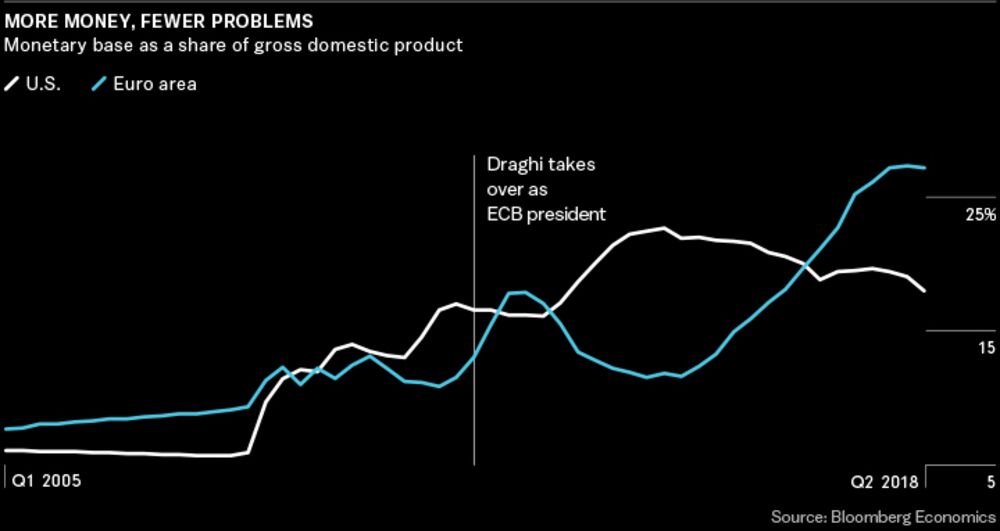
$Trillions and $trillions were printed up, and many times that amount were leveraged and loaned throughout the banking and speculative finance universes:
If you can't clearly see how the above chart explains the massive price inflation over the past years in stocks, bonds and real estate, you'll have no chance of understanding what’s coming next. Best of luck to everyone choosing to avoid paying attention to this critical information; you'll dearly need it.
Paying attention or not, here we all are; stuck together in a world awash with credit. $250 trillion in debt. 4 times that amount in unfunded liabilities. And a mind-bogglingly massive amount of tangled financial derivatives roughly the same size as both those debts and liabilities put together.
The Greed Is Now Gone
All that credit had to go somewhere. And it did.
Rare art fetched record-breaking prices. As did top-end trophy properties the world over. Rare cars and large gemstones commanded the highest prices ever seen. Stocks were bid up to ridiculous Price/Earnings multiples. And the Housing Bubble 2.0 returned to many metros around the globe -- housing has never been more unaffordable to more people than it is now.
Can you feel it? How greed is now giving way to fear?
Sure, you probably know people who are hanging onto the Wall Street marketing slogans (“Buy the dips…hang on…don’t panic…successful investors don’t sell into weakness, they buy more!”). But the party atmosphere is now over.
Just ask anyone who bought a house in Seattle in June (now down 11 percent). Or FAANG stocks in July (down 20 percent+). Or cryptocurrencies in January (down 80 percent+).
We've seen more downside volatility in the financial markets this year than in all of 2012-2017.
Until and unless the central banks reverse their current tightening course, everything is headed lower.
And I mean everything.
How bad will it get? Honestly, pretty damn bad. Worse than 2000 and worse than 2008.
The credit cycle is just that much larger this time.
It’s the airgap between the economic value added (EVA) lines below and the spiked tops above that defines the amount off pain involved in the unwinding. This chart clearly shows the reckoning is going to be on a scale we've never experienced before.
Which is why our our advice continues to be protect your money, develop all 8 Forms of resilience (especially Emotional), and prepare to be a source of support for shell-shocked neighbors and loved ones.
The "Big One" Is Here
The recent market volatility is just the beginning of the downslide.
There will be many starts and stops along the way, but coming soon will be a shock that wakes people up and scares them badly.
Perhaps it will be another institutional failure like Lehman Brothers. Or maybe a sovereign default. Or even a central bank failure (yeah, I’m looking at you Swiss National Bank!).
Just "printing less" is causing the major stock indexes to stumble, while plunging the peripheral emerging markets into bear market territory.
What's going to happen when the central banking cartel is in net "money withdrawal" mode? Will today's teetering markets be able to withstand that headwind?
We won’t have to wait long to find out. We should hit that milestone in the next quarter.
For now, the Fed and ECB lack the political capital to resume printing anytime soon. The Bank of Japan hardly has the muscle to muster anything more than temporary speed bump on its wind-down. And China increasingly has less and less motivation to help the US financial elites by rescuing their markets for them. Besides, the Chinese authorities have their own massive collapsing bubbles to contend with right now.
And to add insult to injury, recession indicators are piling up faster and faster now. 2019 is looking primed to be The Year That Mass Layoffs Returned. Should that be the case, the resultant slowdown in consumer spending is certainly not going to help matters.
Against this backdrop, how far could the markets fall from their current prices? Easily 30 percent to 50 percent. And that's if we're lucky.
Those of us who have spent the past years watching in concern as the Everything Bubble grew, this is the moment we've been anticipating. Time to put your crash plans into action.
Let's start out by asking the question “what will happen to Asia/China over the next 2+ years and what will happen with the capital from Asian investors?” Should we believe that China/Asia capital markets are healthy and robust for sufficient ROI in current form or are these investors seeking outside sources for healthier and safer ROI solutions for their capital? And what should we expect over the next 18~24+ months beginning in early 2019?
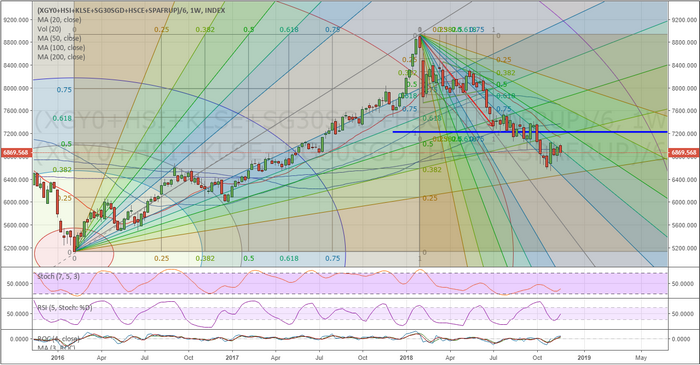
Our Custom China/Asia Index has clearly shown that prices have reflected a downward trend since the top in early 2018. This price decline has already breached the 50 percent Fibonacci retracement level and appear to be attempting a deeper price move lower. We believe the banking/credit/expansion issues in Asia/China are related to this capital contraction and won't abate until the majority of these issues are resolved. In other words, there is far too much uncertainty in this area of the investment world to support a change in investor sentiment. Yes, everyone wants to see Asia/China settle these economic issues and become poised for a stronger growth model going forward, but everyone is also waiting for the next shoe to drop to detail these expectations. Housing, Trade, Credit Markets, Banking, Global Objectives, Regional Issues, Manufacturing? Pick one and wait a few months for some news. At this point, there is so much news originating from China/Asia that is pointing to a broad market correction that we are simply waiting for the next news item to hit.
The One Belt, One Road project is another concerning aspect to what China/Asia is capable of achieving. This project is incredibly diverse – spanning dozens of nations/countries. The reality of this project is that uncertainty abounds from all angles when one considers the routs this project is taking and the global uncertainties that originate from many of the areas on these routes. Tehran, Kenya, Pakistan, Sri Lanka, Kuala Lumpur, Jakarta? Sure, the land and sea transport solutions offer a very interesting and dynamic shift for economic growth, but this is all based on the assumption that wars, graft, politics and local/regional tensions don't flame up to halt or block any of these routes and the future success of this project.
Already, Malaysia has terminated multiple projects related to the One Belt, One Road objective because of corruption and fraud against the Malaysian people. We are reading news stories of Pakistan and other nations questioning the deals made with China in support of this project. In our opinion, the land routes are much more fragile than the sea routes. Ships can change course and head to another port if needed. Train tracks are not easily relocated and shifted around to address regional issues
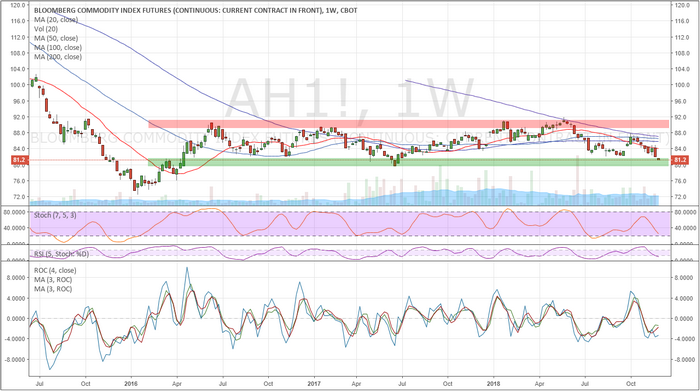
Additionally, the global commodities pricing index (from Bloomberg) is suggesting that global commodities have reached a peak and are declining. This puts pricing pressures on larger global projects like the One Belt, One Road project because profits from mining or manufacturing raw commodities and secondary commodity products are dramatically decreased. This would also suggest that suppliers and manufacturers may be experiencing an economic stall in terms of growth expectations over the next few years. If the commodities futures prices are declining, then global investors are not seeing any aspect of the global markets that would relate to higher demand, manufacturing or increased general consumption/use of global commodities.
Watch Crude Oil for signs of life in the economy. The price of Oil is often a very good gauge of economic activity and expectations in terms of freight, shipping, consumer activities and more. Oil has seen a very dramatic selloff over the past 2 months and is nearing levels that should be concerning for producers. Oil price levels below $40 ppb could be a game changer for much of the Arab world.
Our conclusion is that until global investors see the true opportunity for Asia/China and see real strength in the global commodities markets, risks continue to outweigh opportunities in much of Asia/China. Therefore, we believe the capital shift phenomenon originating from this region will continue to source more suitable returns in other global investments. Should the commodity index break down or the Chinese/Asian markets collapse further, we believe the push for outside safety will increase. This may be likely near the start of 2019.
Slight dated article but absolutely worth reading and emulating.
Jiddu Krishnamurti spent his life giving spiritual talks. As he got older, he became more candid. In one famous moment, he asked the audience point-blank if they wanted to know his secret.
He whispered, "You see, I don't mind what happens."
I've spent the last five years as an investor trying to do the same. I've made a concerted attempt to care less about what happens in the investment world. I still pay attention, of course. It's my job. But I'm far more selective about what I read. It has helped more than I could have possibly imagined.
Caring gives a false impression that what you're thinking about is important. If I pay attention to quarterly earnings, shouldn't I be a better investor? If I check what the market did this morning, am I not more informed?
Common sense tells you yes. But it's wrong. More often than not, not caring is the way to go.
My journey started with a realization that the more media investors paid attention to, the worse they did. The more they analyzed, the more decisions they had to make. The more decisions they made, the more chances they had at being wrong, letting their emotions take over, and doing something regrettable. Find someone who has mastered personal finance, and you'll find someone with a pathological ability to not give a damn.
There are so few exceptions to this rule it's astounding. Where is the evidence that paying attention to every last piece of market news makes you a better investor? I've looked. I can't find it.
So I stopped caring about a few things.
1. Finding the perfect portfolio
Investors crunch numbers to find the perfect number of international stocks they should own at a certain age, the precise amount they should allocate to bonds, and exactly when they should cut back on stocks when historical models show they're overvalued.
Here's the truth: None of these models are perfect, so back-of-the-envelope, "good enough" estimations will usually do just fine.
Harry Markowitz won the Nobel Prize for creating modern portfolio theory, a formula that precisely calculates the optimal asset allocation to maximize return at a given level of risk.
With his own money, he found this too complicated.
"I visualized my grief if the stock market went way up and I wasn't in it -- or if it went way down and I was completely in it," Markowitz once said<http://www.nytimes.com/2007/09/29/business/29nocera.html>. "So I split my contributions 50/50 between stocks and bonds."
Good enough.
2. Quarterly earnings
The median company in the S&P 500 was founded in 1949. So it's 66 years old. Therefore quarterly earnings tell you what happened in the last 90 days, or 0.3%, of its life. The odds that groundbreaking developments will occur in such a short period of time are slim, and they approach zero as time goes on. It's the equivalent of judging how your day is going by analyzing the last four minutes.
What are the odds that I'll be 80 years old and say, "Man, I wish I paid more attention to Microsoft's Q2 2011 revenue"? Pretty low. So I choose not to care.
3. Wondering why the market fell
The Dow fell 0.4% on Wednesday. Why?
Lots of reasons were given. One article blamed fluctuating interest rates. Another cited "Greece worries." Others pointed to the Fed, weak GDP growth, and falling energy prices.
"Random, unidentified marginal sellers were a little bit more motivated than random, unidentified marginal buyers" wasn't mentioned. But it's the best explanation for why stocks fell. The same goes for almost every day.
4. Getting other investors to agree with me
Let's say your weather app says it'll be 78 and sunny tomorrow, and mine says it will be 74 and overcast.
Would we argue about this? Go on TV and duke it out? Call each other names?
Of course not. We'd say, "Eh, let's just see what happens. Probably doesn't matter either way."
Investors don't think this way. The fights people get into about whose forecast is right are off the charts.
Unlike weather, money is an emotional subject. And unlike tomorrow's temperature, our investment decisions are in our control. So many investors get offended when others disagree with them. But once you realize that A) your views are just as biased as everyone else's and B) there's a good chance you're both wrong, you stop seeing any reason to argue. Debate, sure. But life's too short to argue.
Investing is so much more fun when you come to terms with these things. Set up a portfolio that suits you -- one that lets you sleep at night and gives you a reasonable chance of meeting your financial goals. Give it room for error<http://www.fool.com/investing/general/2013/08/09/the-3-most-important-words-in-investing.aspx>. Have a backup plan. It's the best you can do.
In the junk-bond market was a dark underworld. It was the home of “fallen angels”, the bonds of investment-grade firms that had gone to seed. Most investors were too genteel to hold them. So they traded at hefty discounts to face value. Then Michael Milken, a junk-bond guru, came along with a new gospel. A portfolio of high-yield junk was a better bet than one of supposedly safer bonds. After all, an a-rated bond can only go in one direction—down.
The corporate-bond class system is still in place. Many types of mutual fund are barred from holding non-investment grade (ie, junk) bonds. But junk is no longer a stunted and shameful offspring. The high-yield market in America is now worth $1.2trn. And investment-grade bonds have also come down in the world. Around half are rated bbb, a notch above junk. Issuers are slumming it for a reason. A low rating is the price they pay for loading up on cheap debt.
A world with less snobbery of any kind is a better one. But something has been lost. Mr Milken’s early disciples found value in lower classes of bonds precisely because a lot of investors shunned them. Now there is no taboo on holding (or issuing) junk or the junkier sort of investment-grade paper. Therein lies a paradox. When investors get too comfortable with corporate bonds, they may no longer be an asset worth holding.
That level of comfort varies with the business cycle. The best returns are made in the early stages. The default rate is still high. Selling by panicky investors has driven bond prices down, and pushed up yields. Then, as the signs of economic recovery become clear, bond prices rally. As recovery takes hold the “spread”—the extra yield over risk-free Treasury bonds—narrows further.
It is in the latter stages of the cycle, when confidence returns, that things become more hazardous. Lots of bonds are issued to finance projects that will look questionable with hindsight. Tighter monetary policy, a feature of late-cycle economies, pushes up yields. Eventually, the economy is squeezed. This is perilous for firms with heavy debts, which rely on steady profits to pay the interest. Spreads start to widen. Default rates creep up, then surge. And bond prices plummet.
Where the present cycle differs is in the scale of bond issuance. Relative to America’s gdp, the debt of companies now exceeds its previous peak of 2009. Capital markets have more than filled the gap left by slower bank lending. The stock of outstanding bonds has doubled. The share of triple-b bonds has steadily increased. The proceeds have often been used to buy a firm’s own shares.
A further twist has been the surge in so-called leveraged loans, which are packaged by banks and sold to private investors. Their appeal is that they are secured and have floating rates, so they do not lose value as interest rates rise in the way that fixed-rate bonds do. The downside is they feature in the sort of risky buy-out deals that have come to exemplify late-cycle exuberance, says David Riley of BlueBay Asset Management.
When trouble strikes the economy, corporate leverage is likely to make it worse. Corporate-bond spreads are closely watched for early signs that a recession is brewing. Junk spreads have widened in recent weeks (see chart). That in part is because of lower oil prices. Exploration firms are a big chunk of high-yield bonds outstanding, which is why spreads blew out in 2016, when the price of a barrel of crude fell below $30. But it also reflects nervousness about the economy.
The $3trn or so of corporate bonds that lie just above the junk-bond threshold pose a particular threat. “In any recession, a portion of those bond-ratings are at risk,” says Stefan Isaacs of m&g, a fund-management group. Bond funds on either side of the divide have some flexibility in precisely when they sell or buy, he says. It is an opportunity from which old-school junkyard scavengers can make a killing. Still, there may not be enough buyers of junk to snap up such newly fallen angels without prices falling steeply. If a lot of bonds have to change hands quickly, things could easily get messy.
In that event, much of the financial engineering of the past few years will come to look too clever by half. Even so, the secular decline in bond ratings will not always seem like something to regret. The a-rated world will not return. A bigger corporate-bond market is a source of opportunity—for good as well as ill. Losses will be taken. Balance-sheets will be cleaned up. And bonds will eventually rally. Then the cycle can begin again.
I’m not an idiot,” says Liu Yongli, a chauffeur in Beijing, when asked whether he has ever paid personal income tax. Despite earning well above the tax-free threshold, Mr Liu (not his real name) breezily explains that he has never faced any consequences for tax-dodging. Cavalier views like his may help explain why personal income tax accounted for only 8% of total tax revenue in China last year, compared with an average of 24% in the oecd, a group of rich countries.
The finance ministry estimates that 187m people ought to be paying income tax. Yet a former finance official reckons that in 2015 only 28m people—just 2% of the population—did so. In theory, the income-tax reform on which the authorities are embarking, which the People’s Daily, the Communist Party’s main mouthpiece, is calling the most significant in the country’s history, is about narrowing the tax base, not widening it. The threshold at which tax becomes payable was raised from 3,500 yuan ($503) to 5,000 yuan a month on October 1st. The finance ministry says the number of people liable for income tax should fall to 64m as a result. But it also seems determined to make those who owe tax actually pay it—a change that could have dramatic implications for politics.
A revamp of the income-tax system has been in the works for several years. A tax-evasion scandal this summer involving Fan Bingbing, China’s most famous actress, who was exposed by a whistleblower for having ducked nearly 300m yuan in taxes, may have added urgency to the task. (Ms Fan was eventually fined 884m yuan.)
Fanning the flames
Public interest is enormous. A state-sponsored “consultation exercise” on the reform in July attracted over 130,000 comments. That is around 100 times the average for such exercises, which the national parliament is legally required to conduct before approving new laws.
Salaried professionals in big cities have long complained that they bear an unreasonable share of the tax burden. That is because firms are legally required to withhold a portion of salaries in taxes. The rich, whose income usually does not come in the form of a pay cheque, and those in the informal economy, like Mr Liu, find it comparatively easy to evade the taxman. Even salary-earners can evade tax by arranging to receive most of their pay under the table, in cash, keeping their declared earnings below the level at which income tax starts being levied. Employers agree to this scam because it allows them to shirk on social-insurance contributions, which can be as high as 40% of a worker’s salary.
The finance ministry reckons that a worker on a monthly salary of 15,000 yuan is enjoying savings of around 1,000 yuan a month as a result of raising the tax-free threshold. Special deductions that come into force in January for education, care for the elderly and rent, among other expenses, will further boost tax savings. A spokesman for the ministry says the reform will result in 320bn yuan in lost revenue, about a quarter of what the government currently collects in income tax.
But the reforms also include rules that aim to make it harder for companies to avoid social-insurance contributions by paying workers under the table. Those who make more than 60,000 yuan a year will be required to file annual tax returns, starting next year. Preferential tax treatment for annual bonuses may end, notes Freeman Bu of Ernst & Young, an accounting firm. There will be more audits and investigations, predicts Ellen Tong of Deloitte, another accounting firm. Expatriates, who had previously found it easy to avoid being taxed on their worldwide income, will face closer scrutiny. The anti-tax-avoidance provisions in the new law are likely to convince many to “reconsider”, says Grace Lin of Cuatrecasas, a law firm.
Mr Liu, the chauffeur, intends to call the government’s bluff. He believes that most people will not file taxes despite the new regulation. Everyone knows “there is an equilibrium of cheating”, he says: workers skimp on taxes because they do not trust the government will spend their money wisely. Mr Liu cites the Belt and Road Initiative, a global infrastructure-building project, as an indefensible giveaway to poor countries. The government, he explains, has enough “self-awareness” to recognise that turning a blind eye to tax shirkers is in its political self-interest.
But China has run a budget deficit in 21 of the past 22 years. Last year the deficit breached the government’s self-imposed cap of 3% of gdp. Public debt stands at around 50% of gdp. Although none of these figures is alarming, especially by the standards of the rich world, the economy’s slowing growth will eventually make the government’s debts harder to control.
No wonder, then, that officials are keen to boost revenues. Authoritarian regimes typically prefer indirect levies such as consumption taxes, not least because these are less likely to arouse resentment than income tax. If the government manages to expand the ranks of taxpayers, it may feel pressure to provide more detail on how their money is spent, and perhaps even a say in its use. As Bruce Gilley of Portland State University points out in a recent paper, resentment against a tax on salt under the Nationalist government helped to propel the Communist Party to power.
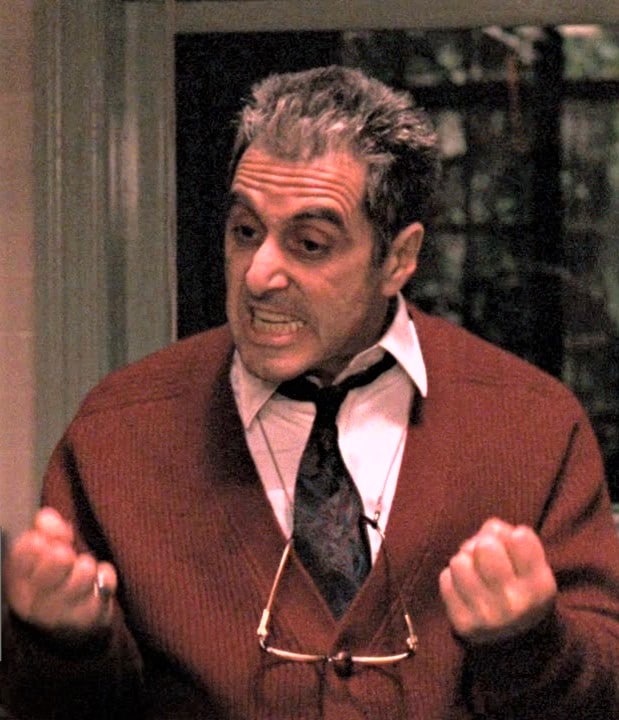
“Just when I thought I was out, they pull me back in!”
It’s one of the most famous quotes in movies, as Michael Corleone rages in Godfather III over the assassination he narrowly avoided and his inability to steer the family into legit businesses.
Michael is what I like to call a coyote, someone who is VERY smart and VERY strategic. Actually, too smart and too strategic for his own good, what a Brit would call too clever by half.
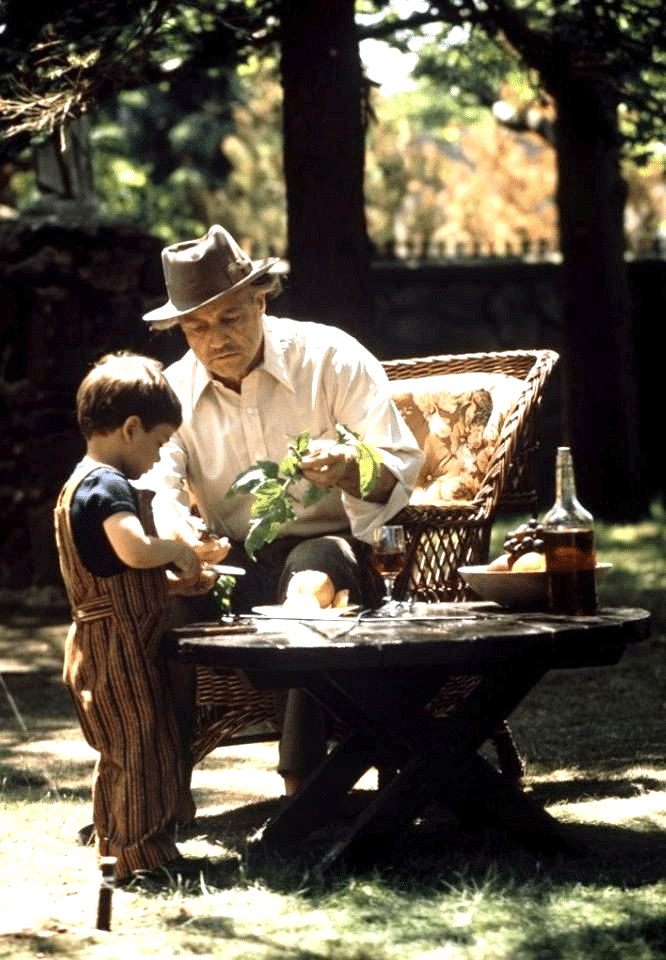
That’s in sharp contrast to his father, Vito Corleone, who is no less smart and no less strategic, but is somehow far less conniving and far more beloved.
You see this difference in character most clearly in the deaths of Vito and Michael.
How does Vito Corleone die? Playing in his vegetable garden with his grandson. At home. Surrounded by life and laughter and plenty of bottles of Chianti.
Vito got out.
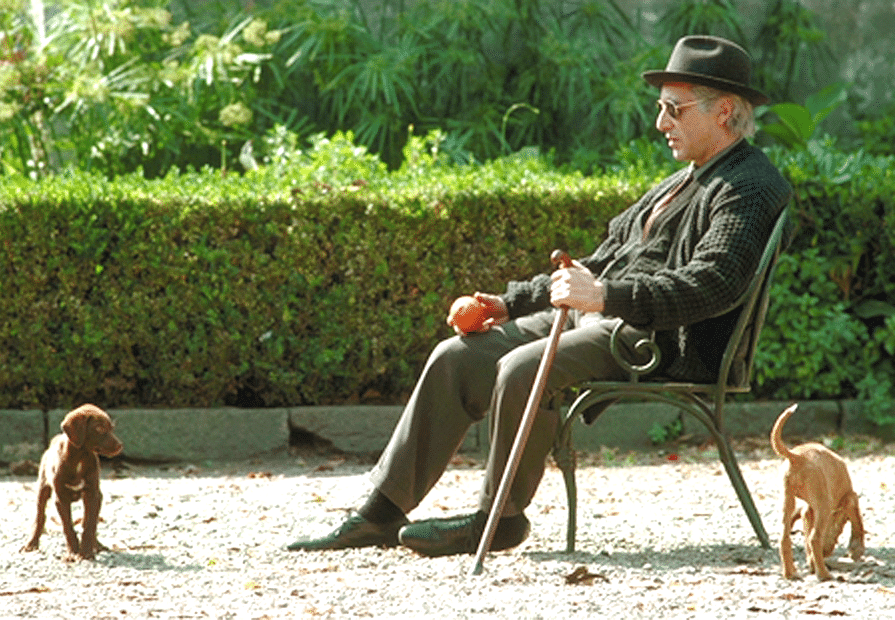
How does Michael Corleone die? Sitting in a stony Sicilian courtyard as two skinny dogs scurry around. Struggling to peel an orange. All dressed up and no place to go. Alone. Utterly alone.
For all his smarts and strategy and cleverness, Michael NEVER got out.
How did Vito get out, while Michael failed? I think it’s the whole too-clever-by-half coyote thing. Michael never trusted ANYONE in the way that Vito did. Michael was obsessed with finding the Answer, an impossibility in the game of organized crime. Or the game of markets.
Michael was a maximizer.
Which is another way of saying that, like most coyotes, he wasn’t very good at the metagame.
Do you want OUT from the game of markets?
I do.
Am I good at the game? Yeah. Do I enjoy it? Not really. I used to. But ever since Lehman it’s been mostly a drag. And that’s okay! The game of markets is a means to an end. It’s a really big, important game, but it’s only one of several big important games within the larger metagame of life and doing.
My goal in doing is to have a happy ending. I want the Vito ending, not the Michael ending.
How do we get there? We keep our eye on the prize – the happy ending – and we work backwards. We maintain our vision on the metagame and its outcome even while we play the immediate game.
My goal as an investor is NOT to maximize my investment returns or to maximize my personal wealth. That’s myopic thinking. That’s coyote thinking. That’s the sort of thinking that ruined Michael.
My goal as an investor is to minimize my maximum regret in the metagame. What is that maximum regret? Dying alone. Failing to protect and sustain my pack, both at the most personal level of family and the broadest level of humanity. Minimizing the risk of THAT is what drives my doing, in both politics and in markets. I want enough wealth to avoid the bad ending, not the most wealth I can possibly achieve, because going for the most wealth I can possibly achieve actually increases the chances of the bad ending.
You will NEVER get out of the immediate game, whether it’s the mafia game or the markets game, if you play that game as a maximizer. You will ALWAYS be pulled back in.
And yet, all of our dominant ideas about financial advice – ALL OF THEM – are based on the assumption that we are maximizers. Every bit of Modern Portfolio Theory – ALL OF IT – is based on assumptions of maximization. All of those Big Bank model portfolios that are handed down from on high every month – ALL OF THEM – are based on the assumption that we are maximizers. Worse, all of these ideas about economics and investing aren’t just based on the assumption that we ARE maximizers. All of these core ideas about financial advice are based on the narrative that we SHOULD BE maximizers.
The business of financial advice is hurting. We all know that. It’s hurting for its practitioners and it’s hurting for its clients. I think it’s hurting because the narrative of maximization, in both its descriptive and its normative forms, gives particularly poor outcomes when Things Fall Apart. It gives particularly poor outcomes when the gravity of a Three-Body System makes the ground beneath our feet quiver and shake.
In order to survive … in order to do better for clients … the business of financial advice needs a new narrative, one based on what truly matters for practitioners and clients alike in a world of profound uncertainty.
What is the new narrative for financial advice?
I think it’s regret minimization in the metagame rather than reward maximization in the immediate game.
On July 26, 2012, the European Central Bank president drew a line in the sand and framed his legacy.
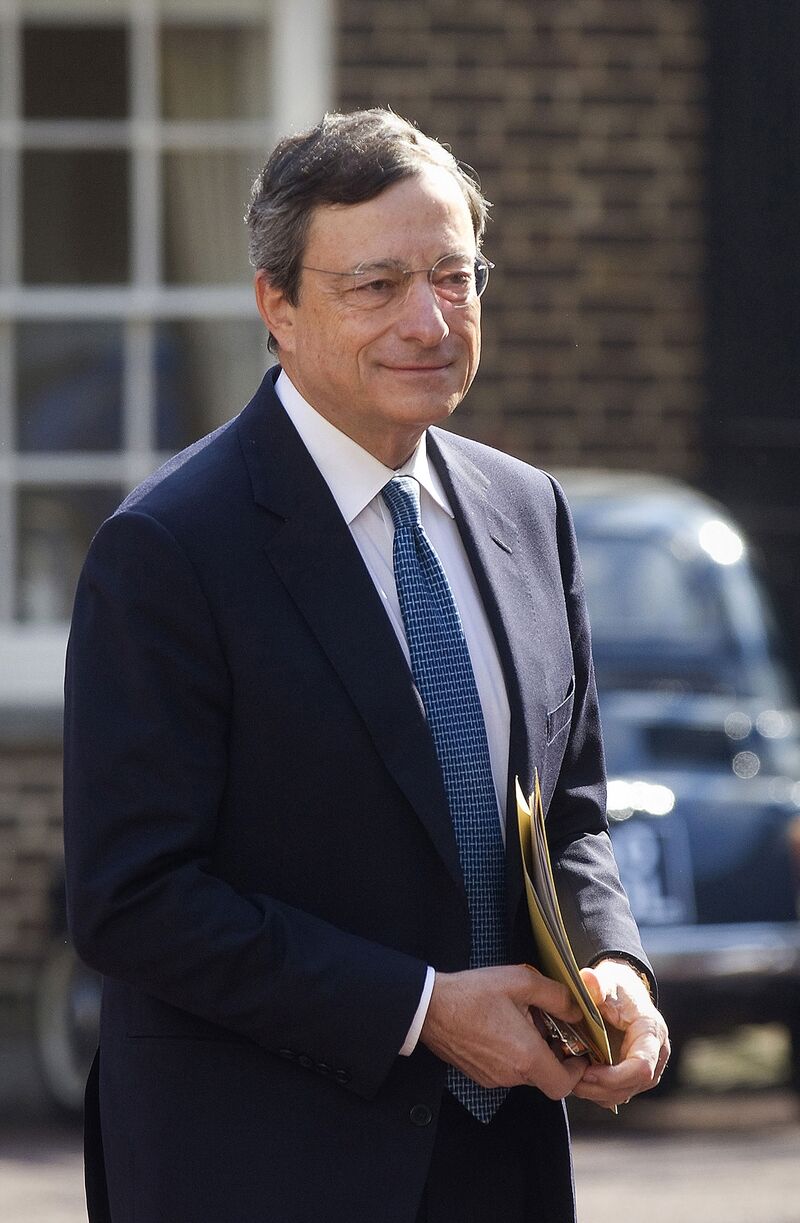
It’s July 26, 2012. In financial markets, a dark storm is brewing, but on this Thursday morning it’s as if London doesn’t care: The sun bathes the waking city in golden light. Lancaster House, a Georgian mansion that sits between Buckingham and St. James’s palaces, is bustling with activity ahead of an investment conference convened by Prime Minister David Cameron. At a morning panel, several luminaries, including European Central Bank President Mario Draghi and Bank of England Governor Mervyn King, have been brought together to discuss challenges to the global economy.
As weighty as the subject is, and even though the euro is under siege as a three-year-old sovereign debt crisis wracks Europe, the room lacks a heightened sense of anticipation. “No one had planned this to be an event of great significance,” King recalls. “This is important in understanding what happened next.”
Chatting with his fellow panelists, Draghi seems almost preternaturally relaxed. He tells them, “Why don’t you take as much time as you want? I don’t want to say much.” And at first that seems to be the case. When he reaches the lectern, he starts off by telling the audience that the euro is like a bumblebee. It manages to fly contrary to the laws of physics. Now it must “graduate to a real bee.” Perhaps the analogy is familiar to Italians, or to entomologists, but mild bewilderment is spreading through the room.
Draghi carries on, rarely referring to his notes. Some six and a half minutes into his remarks, he looks down. Takes a breath. Folds his hands. “But there is another message I want to tell you,” he says in Italian-accented English. “Within our mandate, within our mandate, the ECB is ready to do whatever it takes to preserve the euro.” He pauses and adds, leaving no doubt about his meaning, “Believe me, it will be enough.”
Whatever it takes. The rest of his speech after this 16-second episode is a blur to many people. But those three words stick.
What follows is the inside story of that moment and how it set the tone for Draghi’s term at the ECB. This reconstruction is based on interviews with dozens of central bankers, politicians, and officials across the European Union and the U.S. Some spoke on the record. Others requested anonymity. As he enters his final year at the helm of the ECB, Draghi said he wouldn’t comment for this article.
The story of Draghi’s pledge to save the euro really begins a month before he’ll make it. The euro area is an investors’ free-for-all, and the stakes are as high as they get: the survival of the single currency, which for Draghi, like many Europeans, is the emblem of a generation’s efforts to bring peace and prosperity to a continent torn apart by two bloody wars. Now, in the early summer of 2012, with financial markets doubtful that the weakest euro zone countries can repay their debts and with an economy plunging back into recession, the flaws of a single currency are all too apparent: 17 independent countries, a tangle of budgets, no unified governance, wildly different economies.
In this atmosphere, the leaders who make up the European Council gather in Brussels for a crisis summit—their 19th. They emerge in the early morning hours of June 29 with a clutch of commitments about joint bank supervision, budget coordination, and more centralized economic policymaking. It amounts to little more than a plan to come up with a plan, and, while some of the summiteers are desperate to enlist the ECB to forestall disaster, Draghi seems less than impressed. “I’m actually quite pleased with the outcome” is all he can bring himself to say. His message to the council is straightforward: You need to act; no ECB intervention will be effective without more integration—fiscal, economic, political.
For Draghi, the summit outcome at least confirms something he’s maintained since he took office eight months earlier. Despite the skepticism of investors and widespread popular resignation across the continent to a seemingly never-ending crisis, EU member states remain as committed to their union, and to the euro, as they were in the beginning. And yet markets seem to take little notice of the council’s vaguely worded commitments. Speculation against the euro continues. Draghi knows something more is needed.
Over the next several weeks he shuttles in and out of Frankfurt, where the ECB’s headquarters is, and across Europe, pondering his options. He’s asking people questions whenever he has a chance to. What could the ECB do? Why should it do something? How can it ensure that what it does will be successful? Those close to Draghi sense that something is in the air, but they can’t put their finger on what it is.
Investors are yearning for a bold signal, and Draghi—whose time at Goldman Sachs in the 2000s gave him an insight into the psychology of markets—knows the stakes. Klaas Knot, governor of the Dutch central bank, remembers asking him in early July: “Do you have something in mind?” Draghi’s answer: “Nothing concrete yet. But it needs to be big.”
And it will be. Whatever it takes. This isn’t a last-minute choice of words by Draghi in London, says Stanley Fischer, a former vice chair of the U.S. Federal Reserve who’s been a mentor of Draghi’s ever since he taught him as a Ph.D. student at MIT in the 1970s. “You can be sure he thought about that thing a long time,” he says. “But I don’t think I ever guessed that he would just come out one day and say it so clearly and simply. It was a masterstroke.”
Christine Lagarde, the managing director of the International Monetary Fund, is sitting in the front row at Lancaster House only feet from where Draghi is speaking. It occurs to her that, with his pronouncement, he may have just saved the euro. Draghi himself doesn’t seem convinced at first. As the ECB president leaves the stage, Jim O’Neill, who at the time was the chairman of Goldman Sachs Asset Management, applauds Draghi’s “incredibly important comment.” Draghi’s response is little more than a verbal shrug.
One of the first people Draghi phones after the speech is Jens Weidmann. As president of Germany’s Bundesbank, Weidmann is one of the most influential policymakers on the ECB Governing Council. He’s also one of the most skeptical when it comes to unconventional policy steps. Convincing him would go a long way toward convincing Germans that their money is doing more than just bankrolling irresponsible governments on the shores of the
Mediterranean. Weidmann’s reaction is lukewarm. His opposition will harden only later, when it becomes clear that Draghi is considering buying sovereign debt.
For markets, the approbation that matters most doesn’t come until the following day. German Chancellor Angela Merkel and French President François Hollande have what’s described in the media as a crisis telephone call and afterwards issue a joint statement. In it, they echo Draghi’s promise. “France and Germany are fundamentally tied to the integrity of the euro area,” the statement says. “They are determined to do everything to protect it.”
From that point onward, Draghi’s three-word utterance will frame ECB policy and shape his image as the poster boy of a new breed of activist central bankers. At the time, Draghi, as the guardian of the single currency, probably had little alternative to throwing the full weight of the ECB’s unlimited money supply behind the euro’s survival.
“Draghi understands that the euro is a deeply political project, and he’s made a big contribution to saving it,” says Wolf Klinz, a German Liberal Democrat member of the European Parliament. “His pledge to do whatever it takes was right, even though he may have subsequently taken loose monetary policy a bit farther than strictly necessary.”
The euro still exists, and its foundations have grown stronger: Governments have created a joint bank supervisor under the umbrella of the ECB, set up a permanent rescue fund to help struggling banks and countries, and are in the process of creating a road map for deepening the economic and monetary union.
Even with new measures, there’s no guarantee the euro will survive. Fueled by concerns over immigration, populism has surged and intensified skepticism about greater integration. Some among Germany’s political elites say Draghi is at least partly to blame. The idea of breaking free of the single currency has been debated in election campaigns across Europe and across the political spectrum. The U.K. isn’t in the euro area, but for many populists and nationalists, Brexit suggests it’s possible to leave a coalition meant to be permanent, whether it’s a union of states or a single currency.
When his phone rang on the morning on June 24, 2011, Draghi was under no illusions about the challenges ahead. “Mario, it’s done,” said outgoing ECB President Jean-Claude Trichet. He was calling from Brussels, where the European Council had just signed off on Draghi’s appointment as the ECB’s third president.
Even before Draghi moved into his offices high up in Frankfurt’s Eurotower, the region’s debt crisis had entered a new phase, with Italy and Spain at the center of a financial-market hurricane. Bonds and stocks were plunging, and whatever liquidity was left in the interbank market was evaporating, prompting the ECB to step in and buy sovereign bonds to provide temporary relief. In a speech in Rome on July 13, the 63-year-old ECB president-to-be, who wouldn’t start his new job for another five months, set the tone for his administration: “It is now necessary to give certainty to the procedure for handling sovereign crises by clearly defining the political objectives, the instruments, and the volume of resources.”
It’s been an uphill battle ever since, but as Draghi said at Trichet’s farewell gala in October that year, “Friends tell me that I rarely shy away from impossible tasks.”
Born in postwar Rome, Draghi had learned how to handle difficult situations at a relatively young age. The deaths of his parents—his father was a banker, his mother a pharmacist—within months of each other when he was 15 left him responsible for his two younger siblings. At the time, he was attending Rome’s Istituto Massimo, a Jesuit high school that’s traditionally nurtured Italian elites. Studying under headmaster Father Franco Rozzi—a philosophy professor who demanded of his students, “Why?” whenever they came up with answers—left its mark on Draghi. “Why” remains the most frequent question he poses to his staff all these years later.
After graduating from Sapienza University of Rome with an economics degree in 1970, Draghi continued his studies at MIT. Armed with a doctorate, he returned home to pursue an academic career until then-Prime Minister Giulio Andreotti appointed him director general of the Italian Treasury in 1991. During his 10 years on the job, which required the careful balancing of the political and the technocratic, Draghi served 11 governments. A rare constant amid Italy’s political flux, he overhauled the department, led one of Italy’s largest-ever privatization drives, managed the country’s huge debt, and was instrumental in ensuring the country would be a founding member of the euro in 1999. His nickname—Super Mario—grew out of his leadership during this time.
In 2002, about a year after Silvio Berlusconi rose to power as prime minister for a second time, Draghi moved to London to join Goldman Sachs as a managing director. But by 2005 he began quietly putting out feelers for a return to public service. The next year, during the tail end of Berlusconi’s tenure, President Carlo Azeglio Ciampi called Draghi home to become governor of the Bank of Italy. (He replaced Antonio Fazio, who stepped down and was eventually sentenced to a jail term because he illegally favored a domestic bid over a foreign one in the takeover of Banca Antonveneta SpA.)
Draghi brought a touch of modernity to Palazzo Koch, the central bank’s late-19th-century headquarters, with BlackBerrys arriving on desks. He also brought his signature management style: delegation verging on aloofness. “Where’s Draghi? Elsewhere,” ran a popular office joke. After Draghi left the bank, lawmakers criticized it for failing to take Banca Monte dei Paschi di Siena SpA to task after discovering accounting anomalies in inspections that took place when he was governor. The Italian government had to spend vast sums to bail out Monte dei Paschi once the imbroglio came to light several years later. When asked by reporters in 2013 about his oversight of the troubled lender, Draghi, who wasn’t personally accused of wrongdoing, said, “The Banca d’Italia has done everything it should.”
When Italian Foreign Minister Franco Frattini started lobbying publicly for Draghi to replace Trichet at the ECB in 2009, two years before the position was due to open up, it looked like the job was destined to go to Bundesbank President Axel Weber. After all, no German had held a major European policy post since Walter Hallstein led the executive arm of the European Economic Community from 1958 to 1967.
If he were going to get the ECB job, Draghi had to overcome some obstacles. As a central bank governor, he had a seat on the ECB Governing Council. Council colleagues were irritated by his “I’m dealing with important issues, don’t bother me with details” attitude. They say his impatience and his habit of taking frequent breaks during meetings to conduct other business meant he was not as influential as he should have been considering he represented the third-largest economy in the euro area.
Back home, Draghi and Berlusconi’s finance minister, Giulio Tremonti, were barely on speaking terms as Italy sank deeper into crisis. Tremonti blamed technocrats such as Draghi for allowing the economy to go off the rails. Draghi never tired of reminding Tremonti and other politicians that it was up to them to restructure the economy, foreshadowing the line he would take with governments as ECB president. Italian politicians were outraged when Draghi co-signed a letter with Trichet demanding far-reaching reforms in Italy in exchange for ECB support.
Then, in February 2011, Weber resigned from the Bundesbank because of his opposition to an asset-purchase program, and Draghi saw his chance to go for the job. In interviews and speeches, Draghi made sure the German public was aware of his devotion to the virtues of price stability and fiscal prudence. Apparently convinced, Merkel endorsed him six weeks before the European Council vote. She expected him to run the ECB along the lines of the Bundesbank, whose tight-money policy was the blueprint for the ECB when it was founded in 1998. “He’s very close to our ideas of the stability culture and solid economic policy,” the chancellor said in a newspaper interview.
Draghi’s opening salvo as ECB president is impressive. Two rate cuts in two months reverse a policy of tightening that had prevailed earlier in the year. A series of fresh loans pump €1 trillion ($1.14 trillion) into arid markets, highlighting Draghi’s resolve to do his part in rekindling an economy that had reentered recession in the fourth quarter.
But any additional stimulus, Draghi tells the European Parliament on Dec. 1, 2011, depends on there being a “fiscal compact” among governments. The jawboning pays off, sort of. Within a week, the European Council agrees to tighter antideficit rules and a faster startup of the planned European Stability Mechanism, the euro area’s rescue fund. But Draghi wants more, so instead of stepping up bond purchases, he suspends them.
In playing hard ball, Draghi is taking his cue from Trichet, who offered him some advice during the transition period between their administrations. “I stressed very much the relationship with the heads of state,” Trichet recalls. “I told him, ‘You have to know from time to time the governments are making commitments they don’t honor.’ That was one of the many messages I had for Mario.”
The combination of economic knowledge, market savvy, and political acumen honed since his days at the Italian Treasury serve Draghi well in establishing a rapport with Merkel and other government leaders. But from the beginning his hands-off style irks ECB bureaucrats accustomed to Trichet’s micromanagement. Regular, hourlong crisis briefings introduced by Trichet disappear from the schedule, as do regular catch-up sessions with ECB directors general. Draghi’s approach: If I have a question, I’ll ask.
After his pledge at Lancaster House to do whatever it takes, Draghi returns to Frankfurt and puts his staff to work turning half-formed plans into a viable program. Some heads of government and central bankers might take Draghi to task for not having a more fully formed strategy in the first place, but not Christian Noyer, the former governor of the Bank of France who was part of Draghi’s inner circle. Draghi knew what he was doing, Noyer says: “He was relying on the capacity of the system to invent it. That’s what I call genius intuition.”
At their regularly scheduled meeting a week later, ECB Governing Council members brainstorm late into the night before all but one of them agree that they “may undertake outright open-market operations of a size adequate to” safeguard the euro. “We weren’t too far apart in our assessment of how dramatic the situation was,” Weidmann recalls. “The key difference related to the question of who’s responsible and who can fix the problem sustainably. Nobody denied that the crisis was deep.”
Even so, anything other than unanimity is a sign of trouble within the council and a clue that Germany’s worries have the potential to sway the ECB’s future path. In the years to come, Draghi and Weidmann will clash repeatedly over unorthodox policy. Breaking with tradition, Weidmann will go so far as to stand by those who later challenge the ECB in court, accusing it of overreaching its powers. Never has conflict inside the ECB run so deep.
Over time, the ECB will have to admit in Germany’s Constitutional Court that its Outright Monetary Transactions plan, announced in September 2012 as an unlimited bond-purchase program, does indeed have some limits. But this is a minor concession by the ECB. When the case comes to a close in 2015, the EU’s highest court will confirm once and for all that the ECB acted within its right and that it’s free to choose how to go about ensuring the region has stable prices and a solid currency.
Draghi’s relationship with the German public and leadership will be an aggravation throughout his term. Faced with almost constant criticism that his policies are depriving savers, making the rich richer and worsening political instability in the euro region, Draghi, a private man who doesn’t ordinarily share personal stories, seeks to calm the waters.
In an interview with the German newspaper Die Zeit, he speaks about his family history. He pursues conversations with his most outspoken critics and sends some of his closest allies out to win over those he himself can’t quite convince, such as Germany’s famously implacable finance minister at the time, Wolfgang Schäuble. The pair spar often behind closed doors, not skimping on advice about how each man should do his job. Schäuble, a veteran political scrapper, can get under Draghi’s skin like few others.
For the most part, though, the Italian keeps his mask in place. A man of few words, he is selective in choosing his company and keeps his own counsel. Critics among his ranks complain that serious discussions and arguments are no longer part of the ECB’s decision-making, replaced by prefiltered proposals from Draghi’s inner sanctum.
This is the case with the evolution of the ECB’s large-scale asset-purchase program. In April 2014, with a broad brush, Draghi sketches the premise for quantitative easing in a speech in Amsterdam. Some central bankers worry that this is the start of another go-it-alone initiative to push through controversial policy. But for now, it’s only words.
Four months later, Draghi is in Jackson Hole, Wyo., at the Federal Reserve’s annual retreat. After huddling with his staff most of one morning, he emerges to tell the world that the euro area’s inflation outlook had deteriorated—the very contingency he’d said in Amsterdam would trigger QE.
Convinced the euro probably won’t survive deflation and a third recession in a decade, Draghi sets things in motion. Trusted advisers in the world of finance are corroborating his belief that it’s about time the ECB expand its balance sheet. In Germany, the prospect of large-scale bond-buying is stoking criticism, but Draghi’s patience for the grievances of Weidmann and the broader public is running low. He speaks with Merkel regularly and is convinced she won’t stand in his way.
Faced with objections within the Governing Council, Draghi is willing to make compromises as long as his target, a powerful asset-purchase program, isn’t jeopardized. And so it’s agreed that any potential losses will be absorbed where they occur instead of being shared around the region, as would be general practice. In January 2015, six years after the Fed’s first round of QE, the ECB commits to an asset-purchase program that will balloon to €2.6 trillion by the time it’s due to end in late 2018. “The ECB takes a deliberative approach to easing,” says Angel Ubide, head of economics research for global fixed income at Citadel LLC. “When they do it, they do it all the way.”
The activism Draghi exhibited in the QE saga isn’t always his default response as ECB president. When Greece, the country that triggered Europe’s debt crisis in 2009, moves back into the spotlight in 2015 and a game of brinkmanship makes crashing out of the single currency a real risk, he urges a political solution. He stretches the flexibility of the ECB’s rules to keep emergency liquidity flowing to the country’s banks. Closing the tap would seal the future of Greece outside the euro, and that’s a decision Draghi isn’t willing to take.
“Draghi has the right concept about the role of governments and central banks,” says Yannis Stournaras, governor of the Greek central bank. “He believes in the power of arguments, in the power of doing the right thing. We never believed that at the end of the day, the euro would collapse.”
Draghi’s career at the ECB has been built on that premise. So has his legacy. The impact of “whatever it takes” has been felt far beyond Europe. “It inspired us to think of better ways,” says former U.S. Federal Reserve Chair Janet Yellen, who helped oversee several QE rounds. “We were motivated by Draghi’s basically saying, ‘I assure you we are going to use every power we have to prevent the euro from blowing apart.’ I’m not sure Mario knows he was the inspiration for the design of QE3. Unlimited purchases [of bonds] were our ‘whatever it takes.’ ”
Draghi may also not know he had the ear of President Barack Obama. “Obama often asked me what Mario thought; it carried a lot of weight if I said, ‘Mario’s assessment is—’ ” says Jack Lew, Obama’s chief of staff through 2013 and then secretary of the Treasury. “Sometimes it doesn’t take personal contact to have a relationship.” Nathan Sheets, a former Fed official who was an undersecretary for international affairs in Lew’s Treasury Department, is unambiguous about Draghi’s place in history. “There’s no doubt that Draghi is the guy who saved the euro,” he says. “That’s a pretty powerful legacy.”
Draghi’s achievements on the economic front would be the envy of any central banker: The euro area, now encompassing 19 nations, is enjoying solid, broad-based economic growth; more than 9 million jobs have been created since 2013, and rising wages are finally helping people make up for the ground lost during the crisis. What’s more, the euro still exists, Greece is still part of the single currency, and the euro area is generally considered on a more stable footing than before the crisis.
Draghi regularly pronounces that the euro is here to stay. The euro, he likes to say, is “irreversible.” But is it? Or will it—like the postwar Bretton Woods exchange-rate regime—unravel at some point when European nations decide that economic, financial, and societal changes call for a different monetary order. “It’s impossible to safeguard the single currency forever,” says Clemens Fuest, president of the Ifo Institute for Economic Research in Munich. “The euro area is a currency union of sovereign states, which are free to leave at any point and maybe will. A central bank president can’t prevent that. There’s a certain fragility, which is here to stay.”
For Draghi, the breakup of the euro is unthinkable. Growing up in the shadow of World War II and having done whatever it took to safeguard the euro, he can’t imagine the dissolution of a project he believes has helped keep war at bay.
The day after he stood at the lectern at Lancaster House, nightmare scenarios about the euro seem far from Draghi’s mind. He and his wife, Maria Serenella Cappello, sit quietly and largely unnoticed among the throngs at the Olympic Stadium in London awaiting the opening ceremony of the 2012 Summer Games.
Soon an audience of 900 million around the world will be drawn to a celebration of great feats: the birth of the Industrial Revolution, the creation of the National Health Service, the literature of Shakespeare and Blake and Milton.
Lagarde, seated nearby, spots the Draghis and is struck by the scene. How relaxed they are, as if they haven’t a care in the world. As she would say years later, “He had just moved markets, saved the euro—and pretended he didn’t know.”